Commercial Moves in West Kensington
If you are planning Commercial Moves in West Kensington, you are likely trying to balance a business deadline, a busy building schedule, and the practical realities of moving equipment, files, furniture, and staff without disrupting day-to-day operations. That is exactly why a local, organised move service matters. West Kensington is a busy part of west London with a mix of office spaces, converted buildings, retail premises, studios, clinics, and shared work environments. Moving in and out of this area often means working around narrow roads, loading restrictions, controlled parking zones, lift access, and neighbouring businesses that still need to stay open.
A well-run commercial relocation is not just about getting items from one place to another. It is about planning the move around your business needs, protecting assets, reducing downtime, and helping staff settle into the new space quickly. Whether you are relocating a small office near North End Road, moving a practice close to Kensington Olympia, or shifting stock and fixtures from a shop unit or studio, a structured approach can make the process feel much more manageable.
Our aim on this page is to explain what a commercial move can include, how the process usually works, what to prepare in advance, and why choosing a team that understands West Kensington can make a real difference. If your business is preparing to relocate, contact us today to discuss the move and request a free quote.
Why local commercial moving support matters in West Kensington

West Kensington has its own set of moving challenges. The area combines residential streets with commercial properties, so access is often tighter than in more industrial parts of London. Some premises are on busy routes where stopping space is limited, while others sit inside older buildings with stairs, narrow corridors, and shared entrances. For businesses, that can mean extra coordination before the first box is even lifted.
A local team that works in and around West Kensington is better placed to plan for the realities of the area. That might include arranging collection windows around traffic flow, understanding where parking is likely to be difficult, and choosing the safest route for moving desks, filing cabinets, IT equipment, or stock. This kind of local knowledge helps reduce delays and supports a smoother handover between old and new premises.
Another reason local support helps is flexibility. Commercial moves often change at short notice because of lease dates, fit-out delays, staff availability, or supplier timing. A nearby team can respond more easily to changes, coordinate around access times, and support businesses that need a phased move rather than a single-day relocation.
Who usually needs commercial removals in this part of London?
Commercial relocation services in West Kensington are used by a wide range of organisations. That includes small offices, professional practices, creative studios, charities, retail units, cafés, healthcare and wellness businesses, and companies moving between shared workspaces or serviced offices. Every business has different priorities, but the basic goal is the same: keep disruption low and get operations running again as soon as possible.
Types of commercial moves we can help with

Commercial Moves in West Kensington can take many forms, and each one needs a slightly different approach. A simple office move may involve disassembling desks, labelling boxes, transporting IT equipment, and setting up workstations in the correct order. A retail move may need careful handling of display units, stock, tills, and shop fittings. A professional services office may require attention to confidential documents, archived files, and sensitive equipment.
Many businesses also need support with internal moves rather than a full relocation. For example, if your company is refurbishing one floor, changing the layout of an office, or moving departments into separate rooms, a commercial moving team can help reconfigure furniture and equipment with minimal interruption. This is especially useful in shared buildings and managed spaces where access times are limited.
Some relocations involve a mix of services. You might need packing, dismantling, transport, furniture placement, and waste removal as part of one project. Others require only the transport element because your staff have already packed small items. The right service is usually the one shaped around the move you actually need, not a one-size-fits-all package.
Common commercial premises in the area
- Offices in converted buildings or managed business spaces
- Retail units on local high streets and nearby commercial roads
- Studios for design, media, and creative work
- Clinics and treatment rooms that need discreet handling and tidy scheduling
- Cafés and hospitality businesses moving equipment, stock, and furnishings
- Shared offices and smaller workspaces with strict access rules
What a commercial move usually includes

A professional move service should be practical, organised, and clear about what is included. While each project is different, most commercial relocations involve some combination of planning, packing, loading, transport, and placement at the destination. The best results usually come from treating the move as a project rather than a simple removal job.
Typical services may include wrapping furniture, protecting floors and doorways where necessary, handling office equipment carefully, labelling items for the correct rooms, and moving items in an order that suits your operation. If your business stores records or uses sensitive files, it is also important that paperwork is moved in a structured way so that nothing goes missing during the transition.
For many customers, another valuable part of the service is post-move placement. It is much easier to get back to work when desks, chairs, cabinets, and equipment are positioned correctly from the start. Careful placement saves time after the move and helps staff resume normal routines quickly.
Examples of items often moved in commercial relocations
- Office desks, chairs, and meeting tables
- Computers, monitors, printers, and peripherals
- Filing cabinets, archive boxes, and storage units
- Retail fixtures, shelving, and point-of-sale equipment
- Reception furniture and waiting-room seating
- Workshop or studio tools and materials
- Small appliances, stock, and branded display items
Special care items
Some items need more attention than standard office furniture. That might include fragile technology, large monitors, specialist medical or salon equipment, artwork, heavy cabinets, or awkward pieces that need to be dismantled before transport. If a business has anything valuable, delicate, or difficult to move, it is worth flagging it early so it can be handled properly.
How the moving process works

A structured moving process helps prevent confusion and keeps the day organised. While each commercial move is tailored to the business, the basic steps are usually similar. The aim is to reduce surprises and make sure each stage is handled in a sensible order.
It usually starts with an initial discussion about the current premises, the destination, access conditions, timing, and the type of items being moved. From there, the move can be planned around practical factors such as building rules, lift use, parking access, and whether the move needs to happen outside normal business hours. For larger or more sensitive jobs, a walkthrough or inventory review may be useful before moving day.
On the day itself, items are typically prepared, protected, and loaded in a sequence that supports safe handling. If required, furniture may be dismantled and rebuilt at the new site. Once everything has been delivered, items can be positioned according to your layout plan so your team can start setting up workstations, stock areas, or customer-facing spaces straight away.
Typical move-day stages
- Confirm access and timing
- Prepare and label equipment, furniture, and boxes
- Protect items and load them safely
- Transport items between locations
- Unload and place items in the correct areas
- Reassemble furniture if needed
- Check that essential items are in place for opening or re-entry
Planning for minimal downtime
Most businesses want the move completed with as little disruption as possible. That often means planning around quieter hours, moving in stages, or prioritising essential departments first. If your business needs to keep serving customers during the transition, a phased plan can be very helpful. In some cases, it is better to move equipment before stock, or records before furniture, depending on the way your business operates.
Preparing for your commercial relocation
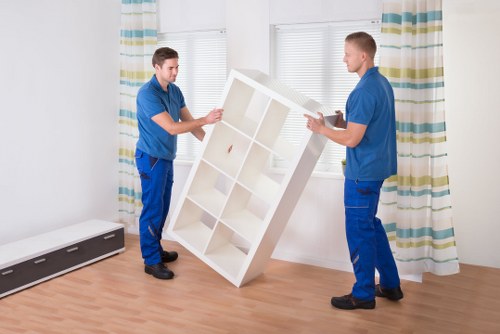
Good preparation can save a lot of time and stress. Before moving day, it helps to decide what is going, what can be disposed of, and what should be relocated in each phase. Many businesses find that preparing a room-by-room or department-by-department list keeps the move far more organised.
It is also important to communicate with staff in advance. Everyone should know what they are responsible for packing, which items must stay accessible until the last moment, and where key equipment should go in the new premises. If several teams share the same space, clear labelling becomes even more important. This is especially true for commercial premises in West Kensington where buildings may be tight on storage and access space.
Preparation is not just about efficiency. It also helps protect confidential information, reduce breakages, and make the new workplace usable faster. A small amount of planning before the move can prevent a lot of disruption later.
Preparation checklist for businesses
- Confirm move dates and access times with your building manager
- Notify staff about packing deadlines and responsibilities
- Label boxes, equipment, and furniture by room or department
- Back up important digital files before disconnecting devices
- Separate confidential documents for secure handling
- Measure furniture and key equipment for the new premises
- Identify items that need dismantling before the move
- Arrange parking or loading access where possible
- Set aside essentials needed for the first day in the new space
Tip: Keep a small “first day” box for each team or department. This can include chargers, keys, stationery, cleaning items, signage, and anything else needed immediately after arrival.
Access, parking, and building challenges in West Kensington
One of the biggest reasons businesses choose a local removals company is the practical difficulty of moving in central and west London areas. West Kensington can involve restricted parking, narrow side streets, controlled loading, and shared access in multi-occupancy buildings. Even a well-planned move can slow down if the team on site is not prepared for these conditions.
Older commercial buildings may have stair-only access or limited lift capacity. Some offices and retail units are in converted properties where hallways are tight and turning space is limited. In these cases, planning the route for larger furniture or heavier equipment becomes essential. Local experience can help anticipate where items may need to be carried, dismantled, or moved in smaller sections.
Parking is another factor that can affect the success of a move. When access is limited, loading needs to be timed carefully to avoid unnecessary delays. That is why it helps to work with a team that understands how moves operate in a busy London district and can take a realistic view of what is possible on the day.
Why this matters for your business
Any delay in access can affect staff productivity, customer appointments, deliveries, and reopening schedules. For businesses with a fixed opening time, such as clinics, salons, or shops, even a small setback can have a knock-on effect. Careful planning around access and parking helps keep the move on track and reduces avoidable pressure.
Pricing factors for commercial moves
Every commercial move is different, so the cost usually depends on a number of practical factors rather than a standard one-size-fits-all figure. When requesting a quote, it helps to be clear about the size of the premises, the amount of furniture and equipment involved, access conditions, and whether you need packing or dismantling support.
Key factors may include the volume of items, the number of floors involved, the presence of lifts, the distance between premises, and whether the move requires out-of-hours work. If your business needs special handling for fragile, confidential, or bulky items, that can also affect the planning and the quote. The more accurate the information you provide at the start, the easier it is to receive a realistic estimate.
It is also worth considering the wider cost of downtime. A carefully planned commercial relocation may reduce lost working hours, help staff return to normal sooner, and avoid damage to furniture or equipment. For many businesses, the value is not only in the transport itself, but in the time saved and the stress avoided.
What can influence your quote?
- Size of the office, shop, or business premises
- Amount and type of furniture, stock, and equipment
- Access conditions at both locations
- Need for dismantling and reassembly
- Packing requirements and specialist handling
- Timing, such as weekend or evening moves
- Distance between the old and new premises
Why choose a local company for Commercial Moves in West Kensington
Choosing a local team for Commercial Moves in West Kensington means working with people who understand the pace, layout, and access issues of the area. That can be especially valuable when your move involves tight timing or a building with rules around loading and unloading. Local experience helps turn a complicated move into a more predictable one.
A nearby team is often more adaptable when circumstances change. If your move date shifts, if the building access window changes, or if one section of the move has to happen later than expected, a local provider is usually in a stronger position to adjust. That flexibility is often appreciated by business owners, managers, and operations teams who are juggling many tasks at once.
There is also practical value in choosing movers who are used to working with London commercial properties. They are more likely to understand the best way to protect floors, manage awkward access points, and coordinate the safe movement of office or retail items through a busy urban setting.
Benefits customers often look for
- Reduced downtime during relocation
- Better understanding of local access issues
- Careful handling of office and business equipment
- Clear planning for staff and building managers
- Flexible support for phased or full moves
- Practical help with dismantling and placement
Areas covered near West Kensington
Businesses rarely move in isolation. Commercial customers in West Kensington often have connections to nearby parts of west and central London, and moves may take place between local commercial hubs, surrounding neighbourhoods, and nearby office or retail districts. A local service is useful when your business is moving within the area or beyond it.
Typical nearby locations may include Hammersmith, Earl's Court, Barons Court, Kensington Olympia, Fulham, Shepherd's Bush, and other surrounding west London commercial areas. For businesses with multiple sites, it can be helpful to use the same moving team for inter-branch transfers, storage shifts, and phased relocation work across different premises.
If your business is moving from West Kensington to another part of London, or relocating into the area from elsewhere, the same planning principles apply. It helps to choose a team that can handle local access issues at both ends of the move and manage the transfer in a professional, tidy way.
Businesses that may need service in surrounding areas
- Independent offices and agencies
- Professional practices
- Retail and hospitality premises
- Creative studios and production spaces
- Healthcare, wellness, and consultation rooms
- Shared business spaces and managed offices
Frequently asked questions
Can commercial moves be done outside normal business hours?
Yes, many businesses prefer evening, early morning, or weekend moves to reduce disruption. Out-of-hours planning can be especially useful for offices, clinics, and shops that need to stay open as long as possible before the relocation.
Do I need to pack everything myself?
Not necessarily. Some businesses prefer to handle their own packing, while others want support with packing boxes, protecting furniture, and labelling items. The right option depends on your schedule, the type of items being moved, and how much internal resource you have available.
Can furniture be dismantled and reassembled?
In many cases, yes. Larger desks, meeting tables, shelving, and storage units may need to be dismantled for safe transport, especially where access is tight. Reassembly at the destination can help your team get set up faster.
What happens if my building has limited parking or no loading bay?
This is common in West Kensington and surrounding areas. A commercial move should be planned around the access that is available, using the safest and most efficient loading approach possible. It is important to mention any restrictions early so the move can be organised properly.
Can sensitive files or equipment be moved securely?
Yes. If your business has confidential documents, specialist devices, or valuable equipment, these should be identified in advance and handled with appropriate care. Clear labelling and a structured move plan help reduce the risk of confusion.
How far in advance should I book?
It is best to arrange your commercial move as early as possible, especially if you need a specific date or have access restrictions to work around. Early booking allows more time for planning and helps keep the relocation process calm and organised.
What makes a move feel well managed
A move feels well managed when there is clarity at every stage. That means knowing what is being moved, who is responsible for preparation, how items will be protected, and where everything is going once it arrives. For commercial customers, small details often make the biggest difference.
Examples include clear labelling, sensible sequencing, careful handling of fragile items, and a realistic view of building access. A good service should also be responsive to the way your business operates. Some clients need everything moved in one go. Others need a phased plan over several hours or days. Either way, the service should support your business rather than interrupt it.
When a commercial relocation is done properly, the benefits become obvious quickly. Staff can find what they need, customers see a professional transition, and the new premises are ready for use with fewer delays. That is especially important in a busy area like West Kensington where time and access matter.
Our approach to service quality
We focus on practical moving support, clear communication, and careful handling from start to finish. That includes planning around access, protecting your items, and helping you make the move in a way that suits your business. If you are comparing options for commercial moving in the area, it is worth choosing a team that treats your relocation as a business-critical task.
Book your commercial move in West Kensington
If your business is preparing for a move, now is a good time to organise the details. The sooner your relocation is planned, the easier it is to coordinate access, staffing, packing, and transport without unnecessary pressure. Whether you are moving a compact office, a retail unit, or a larger commercial premises, the right support can make the process far less disruptive.
Request a free quote and share the basics of your move: your current premises, destination, approximate volume, timing, and any access challenges. That information helps us understand what is needed and how to build a practical plan for your relocation. If you are still deciding how much support you need, we can also talk through the options so you can choose the most suitable level of service.
Contact us today to discuss your move, ask questions about access or preparation, and book a service that works around your business schedule. When you need reliable commercial removals in a busy London area, it pays to work with a team that understands the local conditions and the importance of keeping your business moving.
Ready to get started?
Whether you need full relocation support or help with transport and placement only, book your service now and take the next step toward a smoother, better-organised move.
Frequently Asked Questions
The best commercial moves start with a clear plan, a detailed inventory, and a schedule that minimizes downtime. Experienced movers will assess access points, loading areas, fragile equipment, and any after-hours needs before the move begins. This helps keep staff, customers, and operations protected. For a trusted and reliable result, contact our team for a moving quote tailored to your needs.
Licensed commercial movers use proven methods such as color-coded labeling, padded wrapping, equipment dollies, lift straps, and secure packing crates for delicate items. Valuable electronics and fragile office assets are handled by trained teams with experience in commercial relocations. This reduces breakage, downtime, and safety risks during transport. Contact our team for a moving quote tailored to your needs.
Professional movers often use trolleys, panel dollies, furniture blankets, shrink wrap, ramps, hoists, and GPS-tracked vehicles to move items efficiently and safely. For larger offices or warehouses, they may also use pallet jacks and lifting equipment. The best teams choose the right tools for the job to protect your assets and speed up the process. Contact our team for a moving quote tailored to your needs.
When comparing commercial movers near me, look for respected industry accreditations that show professional standards, training, and accountability. Reputable companies often hold memberships or approvals from recognized moving and logistics bodies, which can support quality control and customer confidence. Always ask how long they have served business clients and whether they have a proven track record with commercial relocations. Contact our team for a moving quote tailored to your needs.
A compliant commercial moving company should carry appropriate business insurance, including public liability and goods-in-transit cover, and follow applicable licensing or transport rules for their service area. These protections help safeguard your property and reduce financial risk if something unexpected happens. Always ask for proof of cover and confirm what is included before booking. Contact our team for a moving quote tailored to your needs.
The most affordable commercial move is not always the cheapest quote; it is the one with clear pricing, no hidden fees, and dependable service. Ask for a written estimate that explains labor, packing, travel, and any specialty handling. Trusted movers with years of service often deliver better value because they work efficiently and reduce the risk of damage or delays. Contact our team for a moving quote tailored to your needs.
Commercial moves typically use cartons, bubble wrap, paper padding, furniture blankets, tape, and specialty crates for sensitive items. Many trusted movers now offer sustainable practices such as recyclable boxes, reusable crates, and reduced plastic packaging where possible. If sustainability matters to your business, ask what materials are recycled or reused and how waste is managed after the move. Contact our team for a moving quote tailored to your needs.
Experienced movers protect valuable and fragile items by inventorying each item, using protective wrapping, securing loads correctly, and placing delicate assets in designated transport zones. They also train staff to handle glass, electronics, artwork, and specialist equipment with extra care. A proven track record and strong customer trust are important signs you are choosing a team that takes safety seriously. Contact our team for a moving quote tailored to your needs.
Before you book, ask for a detailed quote that explains exactly what is included, such as packing, dismantling, loading, transport, and setup. A transparent company will also clarify potential extra charges for stairs, long carries, or storage. This helps you compare services fairly and avoid surprises. The best commercial movers are open, upfront, and easy to reach. Contact our team for a moving quote tailored to your needs.
It is usually best to book a commercial move several weeks in advance, especially if you need a weekend, evening, or month-end slot. Early booking gives the movers time to plan access, staffing, equipment, and packing requirements. Businesses with larger offices, specialist machinery, or sensitive documents may benefit from even more lead time. Contact our team for a moving quote tailored to your needs.
Yes, many trusted commercial movers offer after-hours or weekend moves to help reduce disruption and keep your business running smoothly. This is especially useful for offices, retail spaces, and service businesses that cannot pause operations during the day. Ask whether the team has experience with time-sensitive relocations and whether overtime or out-of-hours service is included in the quote. Contact our team for a moving quote tailored to your needs.
Look for years of service, consistent reviews, clear communication, and evidence of successful commercial relocations similar to yours. A reliable company should be happy to explain its process, insurance, accreditations, and safety procedures. Strong customer trust usually comes from punctual service, careful handling, and transparent pricing. If you want dependable support, contact our team for a moving quote tailored to your needs.